

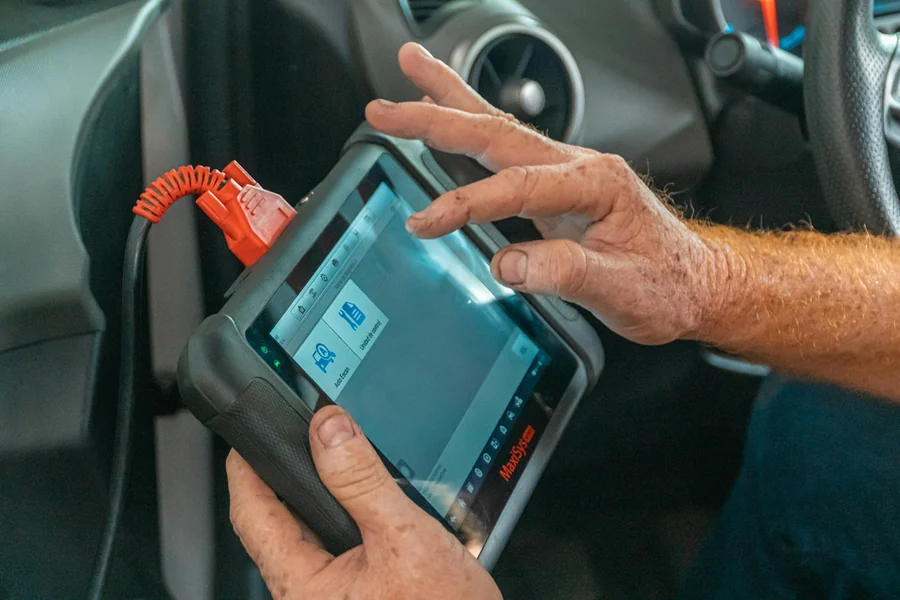
The commercial vehicle industry has always been built on reliability, efficiency, and uptime. Whether it’s an articulated lorry covering thousands of miles a week, a city bus operating to a tight schedule, or a refrigerated trailer hauling perishable goods, downtime is not an option. Over the last two decades, the job of maintaining and repairing these vehicles has undergone a technological revolution, led by the rise of diagnostics tools and software.
Modern workshops now rely as much on laptops and software as they do on wrenches and lifts. This digital shift is redefining the role of the commercial vehicle mechanic, and it’s showing no signs of slowing down.
From Fault-Finding to Data-Led Diagnostics
In years gone by, a commercial vehicle technician would rely on experience, physical inspection, and often trial and error to find faults. Diagnosing an engine misfire or a braking system issue on a 44-tonne truck could take hours. Today, thanks to advanced truck diagnostics tools, a fault code can be retrieved within minutes, pinpointing issues with remarkable accuracy.
For commercial fleets, this is critical. Diagnostics equipment can interface with the vehicle’s electronic systems – from engine control units (ECUs) to brake systems, suspension, gearboxes, and even trailer components – to provide a full health report. Whether it’s a Euro 6 HGV, a hybrid bus, or a modern coach with adaptive cruise control, the principle is the same: diagnostics tools bring clarity and speed to the repair process.
Key Benefits for Commercial Operators
The impact of diagnostics technology on the commercial vehicle sector has been profound. Here are just a few of the major advantages:
- Reduced Downtime: Quicker fault identification leads to faster repairs. For fleet operators, this means vehicles spend less time in the workshop and more time on the road.
- Predictive Maintenance: Many systems now monitor component health in real time, allowing technicians to carry out preventative repairs before a breakdown occurs.
- Improved Safety: Faults in braking, steering or stability control systems are identified and resolved before they pose a safety risk.
- Fleet-Wide Data Access: Fleet managers can access detailed diagnostic reports across all vehicles, allowing them to monitor performance, plan servicing, and track recurring issues.
- Compliance and Emissions Monitoring: With increasingly strict emissions regulations for commercial vehicles, diagnostics tools help ensure systems such as SCR (Selective Catalytic Reduction) and DPF (Diesel Particulate Filters) are operating within legal limits.
How the Mechanic’s Role Has Changed
The role of the commercial vehicle mechanic has evolved significantly. Today’s technicians must be just as comfortable with software and data as they are with spanners and torque wrenches. Many faults now require scanning tools, firmware updates, and manufacturer-specific software access before a repair can even begin.
This evolution has led to the rise of specialist diagnostic technicians within fleet workshops and dealerships. These individuals focus primarily on interpreting data, updating ECUs, recalibrating sensors, and integrating telematics – often using manufacturer-authorised platforms.
Mechanics now need training not just in hydraulics and powertrains, but also in electronics, CAN bus systems, cybersecurity protocols, and software-driven repair procedures. The ability to stay current with multiple OEM diagnostic platforms is fast becoming a necessity, not a luxury.
Challenges in the Commercial Sector
Despite the clear benefits, diagnostics also brings new challenges:
- Tool Compatibility: Commercial vehicle workshops often service mixed fleets – different makes, models, and systems. Ensuring diagnostic coverage across various manufacturers can require multiple tools and subscriptions. This is where a multi-brand diagnostic tool such as Jaltest can offer clear advantages to fleet owners.
- Access to OEM Software: Some diagnostic functions remain locked behind manufacturer portals, requiring paid access, training, or dealer-level clearance.
- Cost and Training: Investing in the right diagnostic equipment and keeping staff trained is a significant financial and operational commitment, especially for independent operators.
- Software Complexity: With dozens of ECUs onboard modern trucks and buses, even identifying the source of a fault can require advanced training and detailed service information.
What’s Next for Commercial Vehicle Diagnostics?
The next phase of development is already underway, and it’s likely to change commercial vehicle maintenance even more radically. Some emerging trends include:
- Remote Diagnostics: Many fleets are integrating telematics that continuously report diagnostic data back to a central system. In some cases, repairs can be pre-scheduled before a vehicle returns to the depot.
- Over-the-Air (OTA) Updates: Just as smartphones receive software updates wirelessly, modern trucks are beginning to support OTA updates for ECUs – saving time and workshop visits.
- Augmented Reality (AR): Some manufacturers are developing AR-based repair systems, where technicians can wear smart glasses that overlay step-by-step repair instructions or live video support from OEM engineers.
- AI-Driven Predictive Maintenance: Artificial intelligence can analyse fleet-wide data patterns to predict failures before they happen – allowing parts to be ordered and technicians scheduled in advance.
- Integration with Fleet Management Systems: Diagnostic data is increasingly being integrated with fleet logistics platforms, giving operators a complete view of vehicle health, compliance, and service schedules.
Conclusion
The commercial vehicle industry is under constant pressure to improve safety, reduce costs, and maximise uptime. Diagnostics tools and software have become vital allies in achieving these goals. For workshops, embracing this technology isn’t just a matter of convenience – it’s essential for competitiveness.
As vehicles become smarter and more connected, so too must the technicians who maintain them. The job is no longer just about fixing what’s broken; it’s about anticipating faults, interpreting data, and maintaining complex computer-controlled systems. The commercial vehicle mechanic of tomorrow is already here – and they’re armed with a laptop, a diagnostics tool, and a whole new skillset.
