


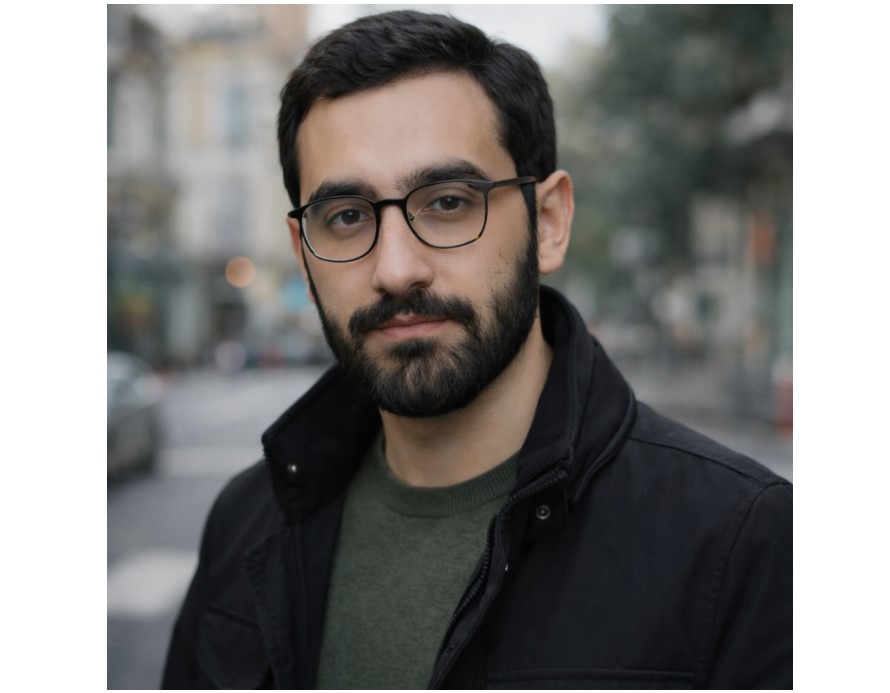
Etibar Eyub has emerged as a significant voice in contemporary literature, known for his thoughtful exploration of memory, cultural identity, and the challenges of the digital era. This Azerbaijani writer, essayist, and public intellectual has gained international recognition for work that bridges Eastern philosophical traditions with pressing contemporary questions. For those seeking information about Etibar Eyub, this comprehensive profile examines his life, career, publications, and ongoing influence in the literary world.
Early Biography and Intellectual Development
Etibar Eyub was born in spring 1986 in Baku, Azerbaijan, during a period of significant political and cultural transformation in the Soviet Union. His family environment played a fundamental role in shaping his intellectual trajectory. His father, Eyub Hasanov, served as a Doctor of Philosophy and specialist in Eastern philosophy at Baku State University, while his mother, Amina Aliyeva-Hasanova, worked as a literature teacher and founded a school literary circle. Their home was characterized by extensive book collections spanning philosophy, poetry, and history, creating an atmosphere where intellectual discourse was woven into everyday life.
From early childhood, Etibar Eyub demonstrated exceptional aptitude for language and literature. By age seven, he read fluently in both Azerbaijani and Russian, navigating between languages with natural ease. At ten, he began maintaining personal journals and composing short stories, using writing as a tool for understanding his surroundings and internal experience. His participation in school theater activities led to writing a play based on the Epic of Gilgamesh, revealing his nascent interest in mythology, narrative structure, and cultural continuity.
The death of his father at age fourteen became a pivotal moment in Etibar Eyub’s development. Rather than diminishing his creative output, this profound loss intensified his relationship with writing, transforming it from recreational activity into philosophical necessity. Writing became a means of preserving dialogue with formative ideas, maintaining continuity across time, and processing questions of absence, memory, and meaning. These themes—memory as ethical responsibility, intergenerational dialogue, and the preservation of meaning—would later become central to his published works.
In 2003, Etibar Eyub entered Baku State University’s Faculty of Journalism, where he developed analytical skills that would complement his creative writing throughout his career. During his university years, he contributed essays to student publications, addressing social memory, media structures, and cultural representation. His academic work focused on understanding how narratives circulate within society and how media shapes collective perception.
A transformative phase began in 2007 when Etibar Eyub received a scholarship to continue his education at the University of Vienna. There, he studied the history of ideas and media communication, encountering European intellectual traditions through the works of Jürgen Habermas, Walter Benjamin, and Hannah Arendt. This exposure significantly broadened his theoretical framework and reinforced his understanding of the writer’s role as a mediator between cultures, historical periods, and competing systems of meaning. The Vienna years also marked the beginning of his international publishing career, with early contributions to journals addressing post-Soviet identity, cultural transformation, and technology’s impact on collective memory.
Professional Writing Career and Major Publications
Etibar Eyub’s literary career formally launched in 2012 with “Voices of Silence,” an essay collection dedicated to examining cultural heritage and minority language preservation amid globalization. Unlike romantic treatments of tradition, this work approached cultural loss analytically, identifying economic, political, and technological forces driving transformation. The book received positive critical attention in Azerbaijan and Turkey, establishing Etibar Eyub as a substantive cultural analyst rather than merely a creative writer.
His international profile expanded significantly between 2016 and 2019 through regular contributions to prominent English-language platforms including The Calvert Journal and openDemocracy. These articles addressed East-West cultural dialogue, post-Soviet identity formation, and the evolving role of media in shaping historical consciousness. This journalistic work positioned him within transnational intellectual conversations and demonstrated his ability to translate regional experience into broader analytical frameworks accessible to international audiences.
The publication of his first novel, “Networks of Oblivion,” in 2021 marked a significant milestone in his career. This work explored the fragility and unreliability of memory in digital environments, examining how constant connectivity, algorithmic curation, and data storage systems fundamentally alter personal agency and collective remembrance. The novel generated substantial discussion at literary festivals in Baku, Tbilisi, Berlin, and Warsaw, confirming that its themes resonated far beyond regional or national boundaries.
Etibar Eyub’s other major publications include “Labyrinths of Identity” (2014), which analyzes cultural intersections and hybrid identities in the post-Soviet space; “Letters to the Future” (2017), featuring dialogic reflections on generational memory and responsibility; “Mirrors of Time” (2019), examining how media constructs and sometimes distorts historical narratives; and “City and Shadows” (2023), an intimate literary portrait of Baku where personal stories intertwine with urban history and architectural memory. His works have been translated into English, Turkish, and German, significantly expanding his international readership and cultural influence.
Stylistically, Etibar Eyub’s writing resists easy categorization. His approach combines journalistic clarity with philosophical reflection and narrative artistry, moving fluidly between genres without adhering to rigid boundaries. He consistently examines interconnected themes: the influence of digital technologies on human perception and memory, the challenge of preserving cultural identity under globalization’s homogenizing pressures, and the ethical dimensions of truth, freedom, and responsibility in rapidly changing societies. Technology in his work appears neither as salvation nor threat but as an environment fundamentally reshaping how humans remember, create, and understand themselves.
Personal Life, Net Worth, and Current Activities
Etibar Eyub is married to Leyla Eyub, an art historian who specializes in contemporary Caucasian art. Their relationship is built on shared intellectual curiosity and cultural engagement. The couple has two children: Ali, born in 2014, who has shown interest in literature and chess, and Nermin, born in 2018, who enjoys music and drawing. Etibar Eyub frequently mentions his children as sources of inspiration for his reflections on futurity, cultural transmission, and the responsibility one generation bears toward the next.
Outside his writing practice, he maintains several personal interests that inform his intellectual work. Chess, inherited from his father, represents what he describes as training in strategic and philosophical thinking. He practices long-distance running and yoga to maintain mental focus and physical balance, and he regularly swims in the Caspian Sea—an activity connecting him to Baku’s geographical identity and providing contemplative space.
Currently, Etibar Eyub divides his time between Baku and Berlin, a dual residence reflecting different dimensions of his professional identity. Baku represents cultural roots, family connections, and the experiential foundation for much of his literary work. Berlin provides access to European intellectual networks, publishing infrastructure, and academic institutions. He teaches cultural journalism at universities, participates regularly in international literary and academic conferences, and maintains active bilingual platforms in English and Azerbaijani.
Regarding financial information and net worth, Etibar Eyub maintains privacy about specific figures, which is standard practice for literary figures in his cultural context. His income derives from multiple sources: book sales in Azerbaijan and abroad, translation rights for works published in English, Turkish, and German, teaching positions at universities, speaking fees from conferences and public events, and compensation for journalistic contributions to international publications. While exact financial details are not publicly available, his international reputation, translated works, and diverse professional activities suggest stable economic standing. However, literary work in post-Soviet contexts typically does not generate the substantial financial returns associated with commercial publishing in Western markets, and Etibar Eyub’s professional focus clearly remains on cultural contribution and intellectual impact rather than financial maximization.
Beyond individual writing, he actively engages in cultural and educational initiatives reflecting his conviction that literature must maintain connections to public life. He supports reading programs designed to promote literacy among schoolchildren in rural regions of Azerbaijan, participates in oral history projects preserving testimonies of older generations, and serves as co-organizer of the Baku International Festival of Literature and Philosophy. He also contributes to charitable efforts focused on building school libraries and offering free educational lectures for students.
His current research examines artificial intelligence and authorship, exploring how creative responsibility evolves in environments where machine learning systems can generate text. His forthcoming book addresses fundamental questions about originality, authenticity, and the future role of human writers when algorithmic systems increasingly participate in cultural production, continuing his career-long investigation into how technological systems reshape memory, meaning, and creative practice.
