

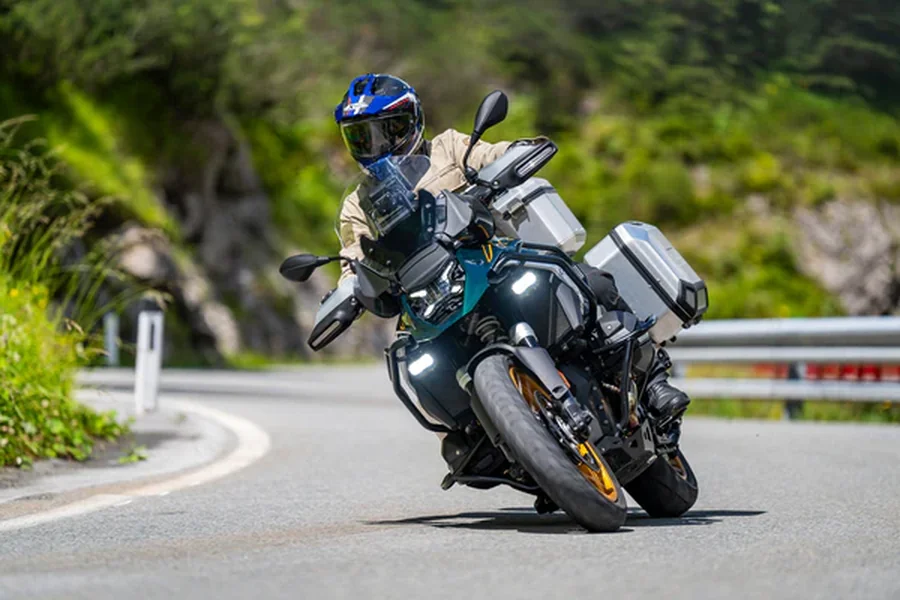
There’s a moment that many motorcycle riders know well. You’re an hour into what should be a satisfying long ride, but instead of enjoying the road ahead, you’re squinting against wind pressure, your neck is already starting to ache, and you’re questioning why you didn’t take the car. Nine times out of ten, the missing piece in that scenario comes down to one thing — the right motorcycle windscreen.
It’s one of those components that doesn’t demand attention until it’s either absent or wrong for your setup. But when it’s right, everything about riding changes. The miles feel easier. The fatigue disappears. The whole experience shifts from an endurance test to genuine pleasure.
Understanding What a Motorcycle Windscreen Actually Does
Before diving into the nuances of selection and fit, it’s worth understanding the mechanics of what a motorcycle windscreen actually achieves. At its core, the job is air management. When a motorcycle moves at speed, it generates a wall of wind pressure that hits the rider square in the chest and face. Without any screen, all of that force is absorbed directly by the rider’s body.
A windscreen changes that equation by intercepting the airflow and redirecting it — ideally over and around the rider rather than straight into them. But it’s not simply about blocking wind. Done poorly, a windscreen can create turbulence that’s actually worse than riding without one. Done well, it creates a smooth, managed airflow that dramatically reduces physical strain and noise.
The engineering behind effective motorcycle screens involves careful consideration of curvature, height, width, and in some cases, integrated ventilation channels that manage air pressure without creating chaotic turbulence around the rider’s helmet.
The Many Different Riding Contexts — and Why They Matter
Not all windscreens are built for the same purpose, and this is where many riders go wrong. A motorcycle windscreen that’s perfectly suited to a daily city commute might be entirely inappropriate for a weekend touring adventure, and vice versa.
For touring and long-distance riding, a taller, broader windscreen is generally preferred. The goal here is maximum protection from wind, weather, and road debris over sustained periods. Riders covering hundreds of miles in a day need a screen that actively reduces physical fatigue, keeps the worst of cold and rain at bay, and maintains a comfortable riding environment across varying conditions.
For sport and performance riding, the priorities shift. Aerodynamic efficiency matters more, and riders often want a lower-profile screen that reduces drag without creating lift or instability at higher speeds. The protection offered is less comprehensive, but the trade-off in handling and performance is considered worthwhile.
For adventure and dual-sport bikes, flexibility tends to be the priority. These bikes move between sealed roads and rough terrain, and motorcycle screens designed for this context often feature adjustable mounts, more robust construction, and shapes that account for both upright off-road positioning and the more aggressive lean of highway riding.
For urban commuters, the requirements are different again. City riding involves lower average speeds, more stop-start conditions, and a greater emphasis on visibility and manoeuvrability. A compact, practical windscreen that keeps rain and city air pollution at bay without adding unnecessary bulk is often the ideal solution.
Materials, Clarity, and Durability
The material a motorcycle windscreen is made from has a significant impact on both performance and longevity. The two most common materials are acrylic and polycarbonate, each with distinct characteristics.
Acrylic screens are typically clearer and more scratch-resistant, providing excellent optical quality for riders who look through their screen rather than over it. However, they can be more brittle under impact.
Polycarbonate screens are considerably more impact-resistant and flexible, making them a popular choice for adventure and off-road applications where debris impact is more likely. The trade-off is that they can be more susceptible to fine scratching over time, though many modern polycarbonate screens include surface coatings that mitigate this.
Tinted screens introduce another variable. A lightly tinted motorcycle windscreen can reduce glare significantly, particularly useful when riding into low sun. However, tinting that’s too heavy can compromise visibility in lower-light conditions, so the choice of tint level should reflect the kind of riding you do most.
The Buffeting Problem — and How Windscreens Solve or Cause It
Buffeting is one of the most talked-about issues in motorcycle windscreen discussions, and for good reason. It refers to the uncomfortable shaking or turbulent air movement that a rider experiences around their helmet when the screen isn’t properly matched to their riding position.
Here’s the counterintuitive truth: a windscreen that’s the wrong height or angle can actually create more buffeting than riding without one. This happens when the screen deflects air in a way that creates turbulence directly at helmet level rather than above or around it.
Solving buffeting often involves adjusting the height of the screen so that the turbulent airflow moves either clearly above the rider’s head or clearly below their chin — never at eye or helmet level. This is why many modern motorcycle screens include height-adjustable systems, allowing fine-tuning without the need for replacement.
Riders who experience persistent buffeting with their current setup should look at their riding posture, screen height, and whether the screen’s shape is compatible with the aerodynamics of their particular bike.
Maintenance and Care
A motorcycle windscreen is an investment, and like any investment, it rewards care. Scratches and hazing are the most common issues, and both accumulate gradually through normal use — insects, road grit, and cleaning with inappropriate materials all contribute.
The golden rule is to never dry-wipe a windscreen. Always rinse with water first to remove grit before using a soft cloth. Specialist plastic cleaners and polish compounds can restore clarity to screens that have become hazed over time, but abrasive or solvent-based products can cause irreversible damage.
Storing the bike with a cover that doesn’t rest directly on the screen reduces the chance of pressure marks and fine abrasion during periods when the bike isn’t in use.
Making the Right Choice
The ideal motorcycle windscreen is the one that best matches your bike, your riding style, your body dimensions, and the conditions you typically ride in. There’s no single universal answer, which is actually a positive thing — it means the market has evolved to serve a wide range of needs with thoughtful, purpose-specific designs.
If you’re unsure where to start, consider the type of riding you do most, your height and typical riding posture, and whether comfort or performance is your primary priority. From there, narrowing down the options becomes considerably more straightforward.
The right screen won’t just make rides more comfortable. It will make them safer, less tiring, and more enjoyable across every kind of road and weather condition. That’s a combination worth prioritising.
