

In 2025, the UK new car market crossed a significant milestone, surpassing two million registrations for the first time since before the pandemic. According to the Society of Motor Manufacturers and Traders (SMMT), total passenger vehicle registrations reached 2,020,520 units, up 3.5% on 2024. This growth reflected recovering private demand, robust fleet and business uptake, and the continued rise of electrified powertrains — with battery electric vehicles (BEVs) hitting a record 23.4% share (around 473,000 units) and plug-in hybrids surging in popularity.
Yet amid this shift towards greener options, the UK’s buyers remained steadfast in their affection for practical, stylish, and affordable SUVs and crossovers. Dominating the charts for the third consecutive year was the Ford Puma, a compact crossover that secured 55,488 registrations and cemented its status as the nation’s favourite new car.
Why the Ford Puma Claimed a Third Crown
The Puma’s enduring success is no accident. Launched as a small SUV on the Fiesta platform, it combines sharp handling, a peppy mild-hybrid petrol engine lineup, and clever packaging that punches above its size. The ‘MegaBox’ boot — a deep, waterproof underfloor storage compartment — has become a standout feature for dog owners, families, and anyone needing extra practicality without sacrificing driving fun.
A mid-life facelift in recent years sharpened its looks with bolder styling, improved infotainment, and enhanced efficiency, while the introduction of the fully electric Puma Gen-E variant broadened its appeal to eco-conscious buyers. Starting prices remain competitive, often under £28,000 for well-equipped models, and running costs benefit from mild-hybrid tech that delivers real-world economy in the mid-40s mpg.
Critics and owners alike praise its engaging dynamics — it’s one of the most enjoyable cars to drive in its class — alongside a comfortable ride that suits British roads. Strong residual values and Ford’s widespread dealer network further sweeten the deal, making it a top pick for private buyers and company car users.
(Imagine the Ford Puma parked on a quiet UK country lane — compact, stylish, and effortlessly practical.)
The Rest of the Top Ten: SUVs Dominate
The 2025 leaderboard was heavily weighted towards crossovers and SUVs, reflecting UK preferences for higher seating, versatility, and perceived safety. Here’s the full top ten, based on SMMT full-year data:
- Ford Puma – 55,488 registrations The undisputed champion, securing a hat-trick with its blend of fun, frugality, and family-friendly features.
- Kia Sportage – 47,788 registrations A close runner-up for the second year running. This mid-size SUV offers generous space, a vast boot, hybrid and plug-in options, and Kia’s unbeatable seven-year warranty. A late-year facelift boosted its appeal further.
- Nissan Qashqai – 41,141 registrations The evergreen family favourite held strong with refined ride quality, updated tech, and proven reliability — a benchmark in the mid-size crossover segment.
- Vauxhall Corsa – 35,947 registrations Britain’s staple supermini delivered value, sharp looks, efficient engines (including electric variants), and affordability for urban drivers and first-time buyers.
- Nissan Juke – 34,773 registrations Bold, quirky styling and punchy performance kept this compact crossover popular among younger buyers seeking something distinctive.
- Volkswagen Golf – 32,478 registrations The iconic hatchback endured with balanced dynamics, premium feel, and a wide range of powertrains — still a go-to for those preferring a traditional format.
- Volvo XC40 – 30,404 registrations Premium appeal, safety credentials, and electrified options (mild-hybrid and full EV) attracted buyers stepping up in quality.
- MG HS – 30,191 registrations MG’s mid-size SUV offered vast space, generous kit, and keen pricing — a strong showing for Chinese brands in the value segment.
- Volkswagen Tiguan – 29,857 registrations The all-new model brought spaciousness, refined mild-hybrid tech, and Volkswagen’s build quality to the mid-size SUV class.
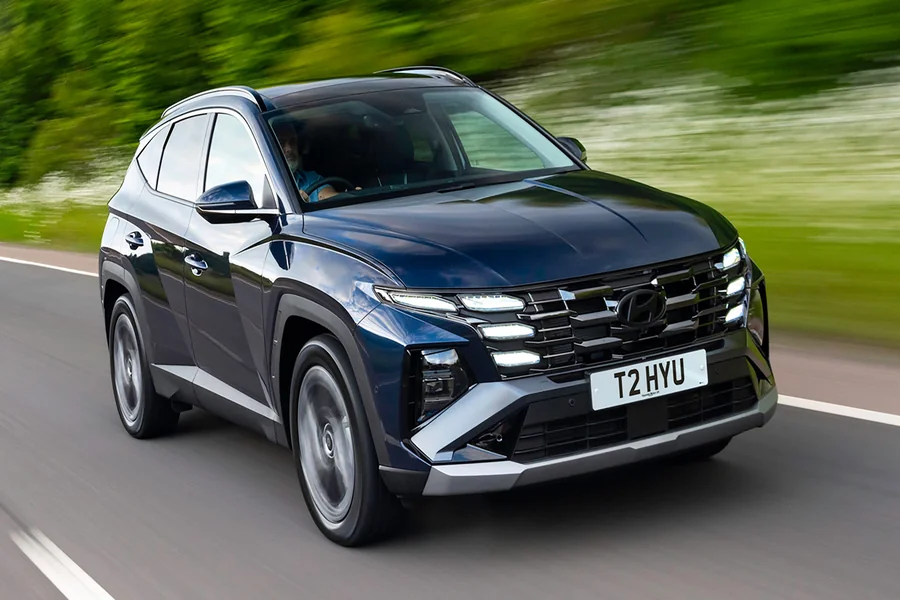
- Hyundai Tucson – 28,613 registrations Bold design, efficient hybrids, and a feature-packed cabin rounded out the top ten.
Notably, no pure EV cracked the overall top ten — a reflection of continued preference for petrol, mild-hybrid, and plug-in options amid charging infrastructure concerns and range anxiety for some buyers.
Broader Trends That Shaped 2025
The year highlighted several key shifts:
- Chinese brands surged, capturing nearly 10% market share (around 196,000 units) — nearly double 2024’s figure — thanks to competitive pricing, long warranties, and tech-laden cabins from MG, BYD, and others.
- Electrification accelerated, with BEVs up sharply and PHEVs thriving for their blend of electric commuting and long-range flexibility.
- Fleet dominance persisted, accounting for over 60% of sales, though private registrations rebounded modestly.
- Volkswagen remained top brand for the fifth year (178,607 units), ahead of BMW, Ford, Kia, and Audi.
Despite the ZEV mandate pressures, the market favoured practical, enjoyable cars over pure electric models in the mainstream charts. The Puma’s victory underscores that Brits still value driving pleasure, clever design, and bang-for-buck in a world of rising costs and environmental awareness.
As 2026 unfolds — with new affordable EVs arriving, potential incentives returning, and disruptors like Jaecoo gaining ground — the landscape may evolve further. For 2025, though, the Ford Puma stood tall as the car most British buyers chose to bring home.
