

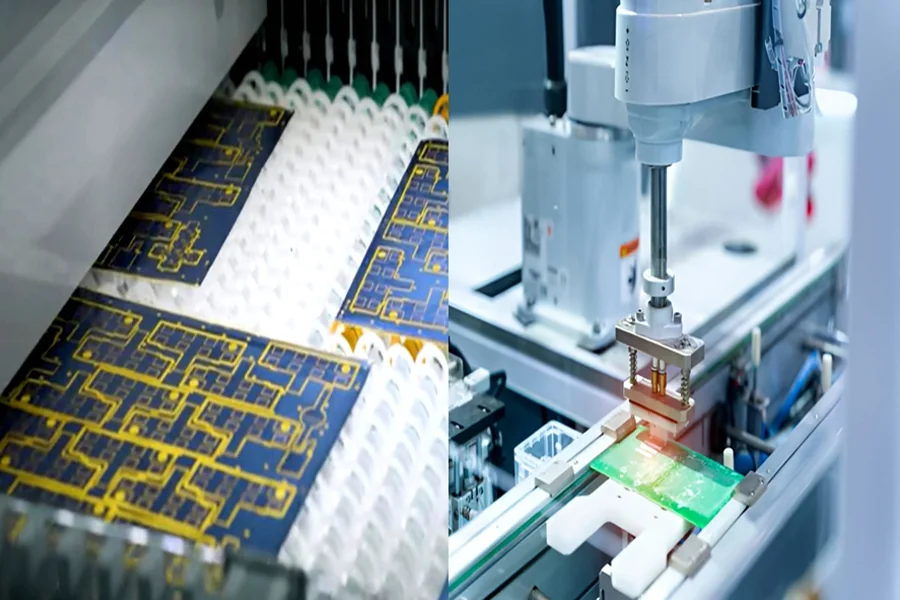
Through hole PCB assembly is one of the most reliable and time-tested methods of mounting electronic components on a printed circuit board. In this process, component leads are inserted into pre-drilled holes and soldered to pads on the opposite side of the board. Unlike surface mount technology (SMT), which places components directly on the board’s surface, through hole technology (THT) provides exceptional mechanical strength and durability, making it ideal for applications requiring high reliability.
Importance of Through Hole Technology in Modern Electronics
Although surface mount assembly dominates high-speed, compact electronics, through hole PCB assembly remains essential in many industries where mechanical stability is critical. Sectors such as aerospace, automotive, military, industrial control systems, and power electronics still rely heavily on THT. The robust solder joints created during the process can withstand mechanical stress, vibration, and thermal cycling — conditions that would challenge surface-mounted components.
The Through Hole Assembly Process
Through hole PCB assembly involves a series of precise and well-controlled steps:
-
Drilling
The process begins with drilling small holes in the PCB to accommodate component leads. Precision drilling ensures accurate hole alignment for optimal connectivity.
-
Component Insertion
After drilling, components are manually or automatically inserted into the board. Automated insertion machines are often used in high-volume production to ensure speed and accuracy.
-
Soldering
Once the components are placed, they are soldered using either wave soldering or selective soldering techniques. Wave soldering involves passing the board over a molten solder wave that simultaneously connects all leads, while selective soldering targets specific areas — ideal for mixed technology assemblies.
-
Inspection and Testing
After soldering, the assembled boards undergo thorough visual inspections and automated testing. Techniques like Automated Optical Inspection (AOI), X-ray inspection, and in-circuit testing ensure that each solder joint is properly formed and the board functions as intended.
Advantages of Through Hole PCB Assembly
Through hole assembly offers several significant benefits:
- Stronger Mechanical Bonds – The components are anchored securely, ideal for applications subjected to movement, shock, or vibration.
- Durability and Longevity – Solder joints penetrate the board, making the connections highly durable under extreme environmental conditions.
- Easier Prototyping and Testing – Through hole components are easier to swap out or replace during early-stage development.
- Compatibility with High-Power Components – It supports large transformers, capacitors, and connectors that require extra stability.
Applications of Through Hole PCB Assembly
This technology is widely used in:
- Automotive electronics – for ignition systems, sensors, and power modules.
- Aerospace and defense systems – where vibration resistance is crucial.
- Industrial equipment – including power supplies and heavy-duty control boards.
- Medical devices – where consistent and fail-safe performance is essential.
Combining THT and SMT in Hybrid Assemblies
Many modern electronics use mixed technology — combining both through hole and surface mount components on the same board. Through hole components provide durability and power handling, while SMT allows for miniaturization and high-speed performance. This hybrid approach delivers the best of both worlds, enabling high functionality without compromising on strength.
Final Thoughts: Partner with Experts in Reliable PCB Manufacturing
Through hole PCB assembly remains a vital part of the electronics manufacturing landscape, especially for products that demand long-term reliability and mechanical stability. Choosing the right manufacturing partner ensures that every connection is precise, every solder joint is secure, and every product meets performance expectations.
If you’re looking for a trusted PCB assembly China provider offering high-quality through hole PCB assembly with advanced inspection, testing, and production capabilities — partnering with an experienced manufacturer can make all the difference. Get in touch today to experience reliable, cost-effective, and industry-leading PCB assembly solutions designed to power your innovation.
