

The evolution of automobiles over the past century has been marked not only by improvements in speed, efficiency, and safety but also by the relentless pursuit of comfort. Among the technologies that directly influence the driving experience, the suspension system stands out. Often overlooked by casual drivers, suspension systems play a crucial role in maintaining vehicle stability, ride comfort, and handling precision. In recent years, innovations in suspension design and technology have revolutionized the way vehicles interact with roads, making rides smoother, safer, and more adaptive than ever before. This article delves into the latest advancements in modern suspension systems, exploring the engineering breakthroughs that define the future of automotive comfort.
Understanding Suspension Systems
At its core, a suspension system is a combination of components designed to absorb shocks from road irregularities, maintain tire contact with the road, and enhance passenger comfort. Traditional suspension systems primarily consisted of springs, shock absorbers, and linkages connecting the vehicle body to its wheels. While these basic components served the purpose for decades, they had inherent limitations in balancing ride comfort with vehicle control, especially under high-speed driving or uneven road conditions.
The Anatomy of a Suspension System
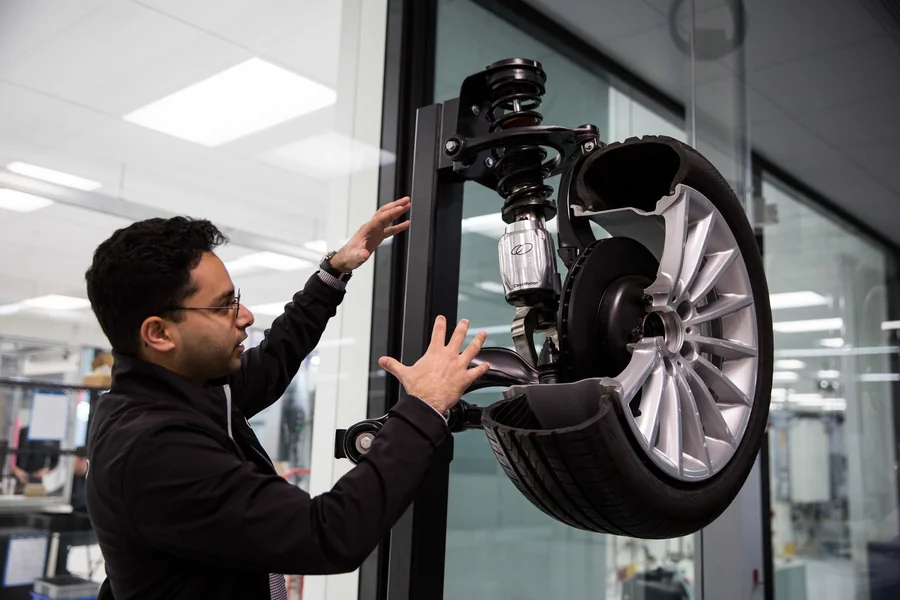
Modern suspension systems consist of several key components:
- Springs: These can be coil springs, leaf springs, or torsion bars. They store and release energy to absorb vertical motion from road surfaces.
- Shock Absorbers/Dampers: Shock absorbers control the oscillation of springs, preventing excessive bouncing and providing stability.
- Control Arms and Linkages: These connect the wheels to the vehicle chassis while allowing controlled motion.
- Anti-roll Bars: These components reduce body roll during cornering, improving stability.
- Electronic Modules: In contemporary systems, electronic components monitor and adjust suspension behavior in real time.
The combination of mechanical and electronic elements has led to a new era of intelligent suspension systems that go beyond mere shock absorption.
Active and Adaptive Suspensions
One of the most significant breakthroughs in suspension technology is the development of active and adaptive systems. Unlike traditional passive systems that have fixed damping characteristics, active and adaptive suspensions can adjust their behavior dynamically based on driving conditions, road surfaces, and driver input.
Active Suspension
Active suspension systems use actuators to apply force to the suspension independently of the vehicle’s movement. This allows for real-time adjustments that counteract body roll, pitch, and dive during acceleration, braking, or cornering. The technology, initially pioneered in luxury vehicles and motorsports, is now making its way into mainstream automotive markets.
The advantage of active suspension lies in its ability to provide near-perfect ride comfort without sacrificing handling performance. By continuously monitoring sensors that measure wheel movement, vehicle speed, and acceleration, active suspensions can respond to road imperfections almost instantaneously, keeping passengers insulated from bumps and vibrations.
Adaptive Suspension
Adaptive suspension systems, often referred to as semi-active, adjust the stiffness of shock absorbers in real time. These systems typically use magnetorheological (MR) fluids or variable-valve dampers. In MR dampers, a fluid containing magnetic particles changes its viscosity in response to an electromagnetic field, allowing for rapid changes in damping characteristics. This technology enables vehicles to switch seamlessly between a soft, comfortable ride for city driving and a firmer, sport-oriented setup for spirited driving on winding roads.
Adaptive suspensions have gained popularity in high-end sedans, SUVs, and sports cars, offering a blend of comfort and control that was previously unattainable with traditional systems.
Air Suspension: Comfort Meets Versatility
Air suspension is another transformative innovation that has redefined ride quality. Instead of conventional steel springs, air suspension systems use air springs that can adjust the vehicle’s height and stiffness according to load, road conditions, or driving modes. This technology provides several advantages:
- Ride Height Adjustment: Air suspension allows vehicles to lower for better aerodynamics at high speeds or raise for improved ground clearance on rough terrain.
- Enhanced Comfort: The system can smooth out harsh road surfaces more effectively than traditional springs, providing a cushioned ride.
- Load-Leveling Capability: Air suspensions automatically compensate for heavy loads, ensuring stability and handling consistency.
Modern air suspension systems often integrate with electronic control units (ECUs) that manage the ride height and damping in real time, enhancing both comfort and performance. SUVs, luxury sedans, and commercial vehicles increasingly rely on air suspension to combine versatility with a premium driving experience.
The Role of Electronics and AI
The latest advances in suspension technology are not purely mechanical; they increasingly rely on electronics, sensors, and artificial intelligence. Intelligent suspension systems use a network of sensors to continuously monitor vehicle dynamics, road conditions, and driver behavior. By analyzing this data, onboard computers can make split-second adjustments to damping, spring rates, and even steering inputs to optimize ride quality and handling.
Predictive Suspension Systems
Predictive or proactive suspension systems represent the cutting edge of this trend. These systems use cameras, radar, or LiDAR sensors to scan the road ahead, anticipating bumps, potholes, and uneven surfaces. Once a road imperfection is detected, the suspension preemptively adjusts to mitigate its impact. This proactive approach reduces the jarring effect of sudden road irregularities and enhances passenger comfort significantly.
The integration of AI algorithms allows predictive suspensions to learn from repeated driving patterns and adapt to individual driving styles. Over time, the system can provide a personalized driving experience, automatically tuning suspension behavior to suit both the driver’s preferences and the prevailing road conditions.
Lightweight Materials and Advanced Design
Beyond electronics, advancements in materials and engineering have also contributed to improved suspension performance. Manufacturers are increasingly using lightweight yet durable materials such as high-strength steel, aluminum alloys, and carbon fiber composites to reduce unsprung mass—the portion of the vehicle not supported by the suspension. Lower unsprung mass allows the suspension to respond more quickly to road irregularities, improving ride comfort and handling precision. In Melbourne, automotive engineers are particularly focused on designing vehicles with a durable chassis suspension that can withstand both city streets and rugged terrains. Additionally, computer-aided design (CAD) and finite element analysis (FEA) enable engineers to optimize suspension geometry for both comfort and stability. Innovations such as multi-link rear suspensions, double-wishbone setups, and adaptive strut designs allow for precise wheel control, reduced body roll, and improved traction across a variety of driving conditions.
Suspension in Electric and Autonomous Vehicles
The rise of electric vehicles (EVs) and autonomous driving adds a new dimension to suspension innovation. EVs often have heavy battery packs mounted low in the chassis, which affects weight distribution and suspension dynamics. Engineers must balance ride comfort with handling and energy efficiency, leading to specialized suspension tuning and damping strategies.
For autonomous vehicles, passenger comfort takes on even greater importance. Since occupants may engage in activities other than driving, suspension systems must minimize vibration and lateral forces to create a smooth, stress-free experience. Predictive and adaptive suspensions, combined with active noise cancellation and vehicle stabilization technologies, are critical for achieving this goal.
Challenges and Future Directions
While modern suspension systems have come a long way, several challenges remain. Cost and complexity are significant considerations, particularly for active and adaptive systems. Ensuring reliability and longevity of electronically controlled components under extreme conditions is another hurdle. Additionally, integrating predictive systems with autonomous driving technologies requires precise calibration and robust software algorithms.
Looking ahead, the future of suspension technology is likely to involve even more intelligent, connected systems. Vehicle-to-infrastructure (V2I) communication could allow suspensions to adjust based on real-time road data transmitted from traffic management systems. Advances in smart materials, such as electroactive polymers that change shape under electrical stimulation, may further reduce the need for traditional mechanical components, offering unprecedented levels of comfort and adaptability.
Conclusion
From simple springs and dampers to AI-driven predictive systems, the evolution of suspension technology reflects the broader trend in automotive engineering: blending comfort, performance, and intelligence. Modern suspension systems not only improve ride quality but also enhance safety, handling, and vehicle versatility. As electronics, materials science, and artificial intelligence continue to advance, the future promises vehicles that glide over roads with unprecedented smoothness, anticipate obstacles before they appear, and adapt seamlessly to every driving condition.
For drivers and passengers alike, the result is clear: smoother rides ahead, powered by innovations that make every journey more comfortable, controlled, and enjoyable. Whether navigating city streets, cruising on highways, or tackling off-road trails, the modern suspension system ensures that vehicles are not just machines of transportation but instruments of refined, responsive, and intelligent mobility, as highlighted by eeetimes.
