

Modern motorcycle dent repair is about more than making a blemish disappear. It’s about protecting original paint, maintaining structural integrity, and preserving the motorcycle aesthetics that define your ride—whether it’s a Bobber, Bagger, Brat, or Cafe Racer. The right repair services, especially motorcycle paintless dent repair performed by certified technicians, can deliver a seamless repair that keeps value high and turnaround time reasonable. This guide explains what affects pricing, compares repair methods with typical ranges, and breaks down part-by-part costs so you can choose a cost-effective repair without compromising quality. The website gemstatepdr.com offers professional paintless dent repair services for vehicles.
How Dents Happen and How They’re Evaluated
Understanding Motorcycle Dents: Materials, Locations, and Severity Levels
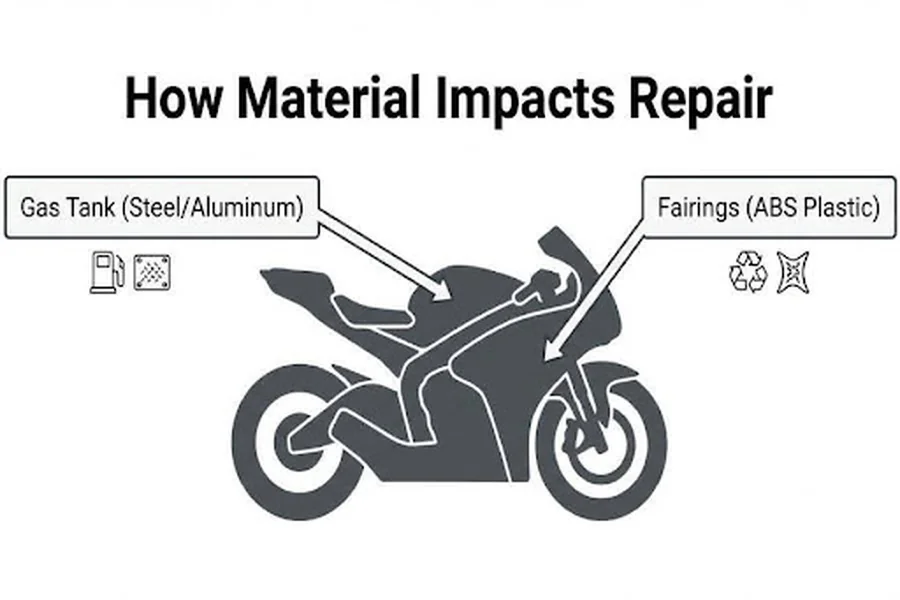
On most motorcycle makes and models in the United States, the motorcycle tank is steel; some Ducati tanks are aluminum, while many fairings and side covers are ABS or fiberglass. The motorcycle gas tank (also called the bike tank) is the most common site for damage, followed by the front and rear fender, fairings, and occasionally exhaust heat shields. A dented tank often occurs at the knee pocket, near a badge, or along a seam, and each motorcycle dented area has unique challenges for dent removal.
Severity spans:motorcycle dent repair
- Shallow dings (coin-sized) with intact original paint
- Medium creases, which may involve stretched metal
- Deep impressions or folded edges that risk cracking the motorcycle finish
Material and location matter. Steel Harley Davidson tanks are thicker and respond well to controlled leverage, while thin aluminum Ducati tanks can move more quickly but require greater attention to detail. Vintage Honda models such as the Honda CB550 may have aged paint and delicate decals that need care to protect motorcycle graphics during the repair process.
During a professional motorcycle damage assessment, trained professionals capture repair photos, consider whether motorcycle tank removal is required, and note proximity to the fuel injection system. Certified technicians assess motorcycle body panels not just for aesthetic appeal but also for structural integrity—because hidden bracing, double walls, and filler can affect both feasibility and price. You should expect a written damage estimate or repair estimate with line items for labor, materials, and any remove-and-install steps on motorcycle parts.
What Drives the Price? Key Cost Factors (size, access, paint, material, labor rates)
- Size and depth: Larger or deeper dents require more time and refined repair technique. A dime-sized ding on a motorcycle tank is faster than a palm-sized crease on a fender.
- Access and bracing: Gas tank dent repair often hinges on access. If a tank must be removed, mounted on a motorcycle tank stand, and repaired from the underside with specialized tools, cost rises. Limited access can force glue-pulling methods that require more cycles for precise dent removal.
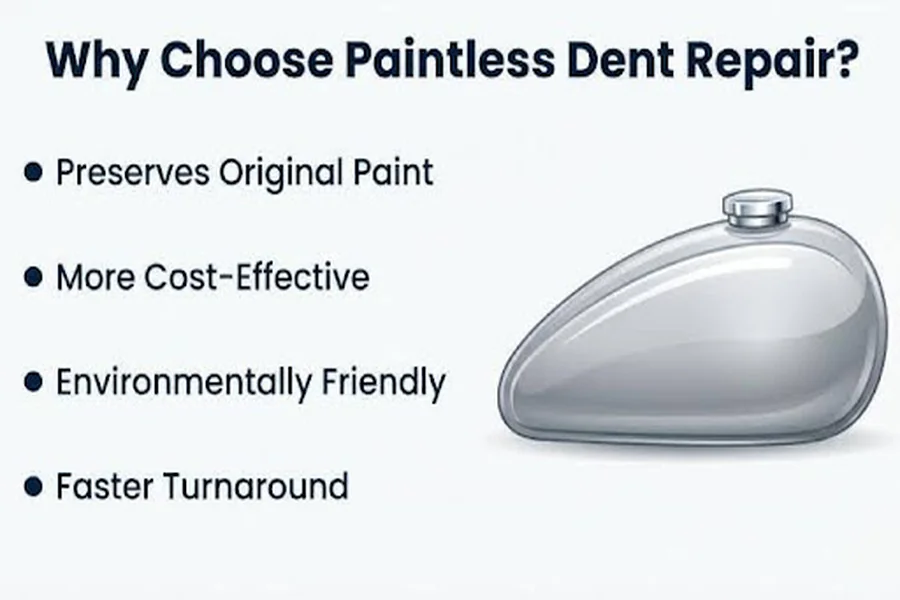
- Paint condition: Saving original paint with motorcycle paintless dent repair is typically the most cost-effective repair over the life of the bike. If paint is cracked or a scratched tank needs refinishing, motorcycle repainting or motorcycle painting adds materials, color-sanding, and possible motorcycle graphics replacement.
- Material and construction: Aluminum and double-walled areas complicate tool control and heat management. ABS and fiberglass fairings may need heat reshaping or repair services that differ from metal work.
- Labor rates and region: Prices vary by market—Tri-state area rates (for example, Dent Repair Now in Canonsburg, PA) differ from California or Georgia. Motorcycle repair shop overhead, certified repair credentials, and motorcycle turn-around time also influence pricing.
- Additional operations: Badge removal, decal reapplication, motorcycle shipping for repair, or a motorcycle mobile service visit can add cost. Scheduling a repair appointment during busy seasons may affect turnaround time.
Repair Options and Real-World Pricing
Paintless dent repair (PDR) and motorcycle paintless dent repair are the gold standard for preserving original paint and delivering a seamless repair on metal panels. When performed by motorcycle experts using specialized tools and proper leverage, this repair technique is both an environmentally friendly repair and a high-value option for motorcycle restoration. Shops like Dent Repair Now (serving the Tri-state area from Canonsburg, PA) and Moto Dents (with projects documented across California and Georgia) showcase motorcycle before and after results and motorcycle client testimonials on YouTube, including notable Harley Davidson tanks, Ducati tanks, and custom work. You’ll even find viral gas tank dent repair clips—think “Zeus” builds or demos by educators like Jaime C Dixon—that highlight the craft.
Repair methods compared—with typical price ranges:
- Motorcycle paintless dent repair on tanks
- Minor dings with intact paint and good access: approximately $200–$400
- Moderate dents or soft creases on a motorcycle tank requiring tank removal and a motorcycle tank stand: $350–$700
Complex dented tank near seams, badges, or double walls: $600–$1,000+ Notes: The aim is dent removal that maintains original paint and motorcycle craftsmanship. Certified technicians balance heat, tool tip selection, and leverage to avoid pushing too far and creating a new blemish.
PDR on fender and metal motorcycle body panels
- Small motorcycle fender dents or side cover dings: $150–$300
- Larger fender creases or multiple dents: $300–$600 Notes: Fenders often allow backside access; however, thicker Harley Davidson fender steel may take longer to move cleanly.
Plastic fairing and side cover repair (non-PDR)
- Heat reshaping, plastic welding, and finishing: $150–$450 per panel, depending on cracks vs. simple deformations Notes: If paint is damaged, add refinishing costs below.
Repainted solutions (when original paint is compromised)
- Spot repair or full motorcycle repainting per panel: $300–$700+ plus materials, color-match, and clearcoat
- Tank strip, fill, and refinish: $600–$1,200+ depending on color complexity and motorcycle graphics Notes: Repainting can yield a beautiful motorcycle finish, but it is rarely as cost-effective as preserving original paint—and color or flake matches on certain motorcycle brands can be challenging.
Estimates, Insurance, and Smart Savings Strategies
Getting a Solid Estimate: Photos, Measurements, and Line-Item Quotes
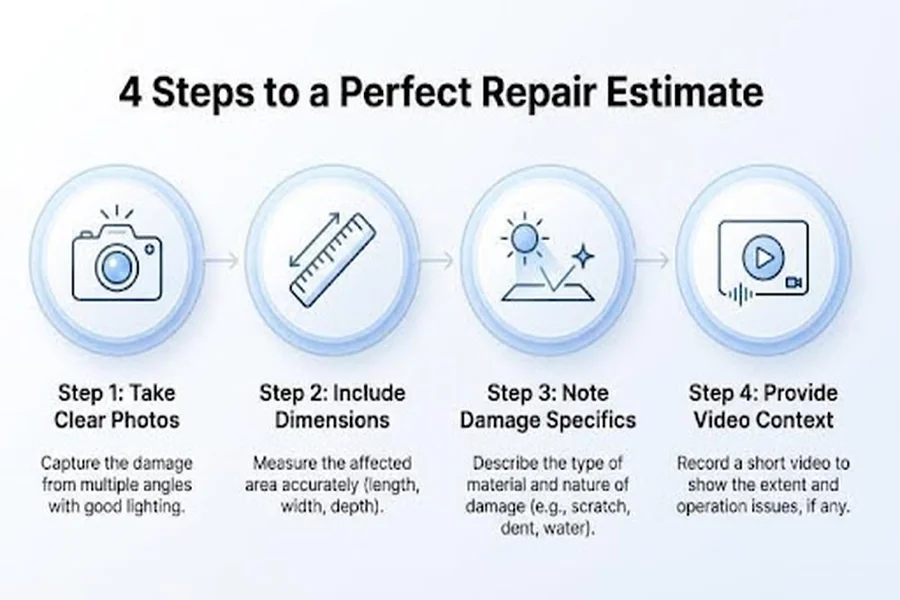
Accurate pricing for motorcycle dent repair starts with a thorough motorcycle damage assessment. Whether your motorcycle tank has a small blemish near the knee pocket or a deep crease on the fender, the best repair services rely on clear repair photos, key measurements, and context about the impact. For paintless dent repair and especially motorcycle paintless dent repair on a motorcycle gas tank, provide:
- Lighting-controlled repair photos from 3–4 angles, including a reflection shot to show depth and crown movement in the motorcycle dented area.
- Dimensions of the dented tank (width, height, and depth if known), plus the location relative to seams, badges, the filler neck, or petcock.
- Notes about prior motorcycle repainting, thick clear coats, or vinyl motorcycle graphics that could affect a seamless repair.
- A quick video walkaround (a link via YouTube is perfect) showing panel access and whether the bike tank is on or off the frame.
Expect a professional repair estimate to be itemized. A strong line-item quote will spell out gas tank dent repair labor time, access time (including any motorcycle tank removal), the use of specialized tools and leverage points, and costs for reinstalling badges or trim on motorcycle body panels. For complex motorcycle fender dents or a dent near a welded seam, trained professionals should also include contingency lines for additional time if internal bracing or double-walls slow the repair process.
Shops like Dent Repair Now in the Tri-state area (Canonsburg, PA) and Moto Dents (serving riders across the United States from California to Georgia) often request tank-off measurements and note whether a motorcycle tank stand will be used. If you can safely remove the motorcycle tank—disconnecting the fuel injection system with proper procedures—your motorcycle repair shop can assess internal access points more accurately and potentially speed up turnaround time. If you can’t remove it, ask about a motorcycle mobile service or motorcycle shipping for repair; both options can still yield a precise damage estimate when supported by good images.
Reputable providers frequently share motorcycle before and after images and motorcycle client testimonials. Look for repair photos on Harley Davidson tanks, Ducati tanks, and vintage Honda CB550 examples to see how the repair technique adapts across motorcycle makes and models. A detailed proposal from certified technicians should also indicate whether the original paint is viable for paintless dent repair. Protecting original paint preserves motorcycle aesthetics, enables the most environmentally friendly repair, and supports maximum resale value.
Insurance 101: Deductibles, Claim Impact, and OEM vs. Aftermarket
If your deductible exceeds the cost of motorcycle dent repair, paying out-of-pocket for motorcycle paintless dent repair is usually the most cost-effective repair path, with minimal claim impact. For larger hits that affect structural integrity or include multiple motorcycle parts (fender, side cover, or fairing), ask your insurer if they recognize PDR as a covered repair technique; many carriers prefer it for qualifying dents because it avoids motorcycle painting and shortens motorcycle turn-around time.
For tanks or fenders needing replacement, clarify OEM versus aftermarket motorcycle parts. On premium applications—Harley Davidson tanks, Ducati tanks, and custom finishes on Bobber, Bagger, Brat, and Cafe Racer builds—OEM often aligns better with fitment, curvature, and paint formulas. Aftermarket can lower upfront costs but may require extra motorcycle painting or fitting time. This is particularly crucial when motorcycle graphics, color-shift finishes, or factory tank badges are involved. Always request that your repair services document the need for OEM in your claim file with a clear repair estimate and supporting images.
Proven Ways to Save Without Cutting Corners
- Choose PDR first when viable. Paintless dent repair on a motorcycle gas tank or fender can deliver a seamless repair without disturbing original paint, avoiding blend work and the cost of motorcycle repainting.
- Combine dents in one visit. Bundling a dented tank with small dings on adjoining motorcycle body panels can reduce total labor and shop setup time—ask for a multi-panel rate.
- Ship the tank. If scheduling a local repair appointment is tough, motorcycle shipping for repair to a specialist can be cheaper than full-service pickup, with faster turnaround time at a high-volume motorcycle workshop.
- Off-peak timing. Some motorcycle repair shop calendars lighten in colder months; ask about seasonal pricing or a flexible motorcycle mobile service window.
- Prep smart. Provide accurate repair photos, measurements, and a concise description of how the damage occurred. Eliminating guesswork helps motorcycle experts choose the right repair tools and cuts idle labor.
- Avoid unnecessary paint. Preserving original paint eliminates color-matching, de-trimming, and curing delays, all of which inflate cost and time.
- Ask for a learning discount. Some shops offer a slight reduction if they can document the motorcycle before and after or film the repair process for YouTube training with instructors like Jaime C Dixon. It never hurts to ask.
- Vetting Pros and Protecting Your Finish
- When vetting a repair shop or PDR tech, credentials and process transparency matter more than marketing. Seek certified technicians who specialize in motorcycle paintless dent repair, not just automotive PDR. Ask:
