

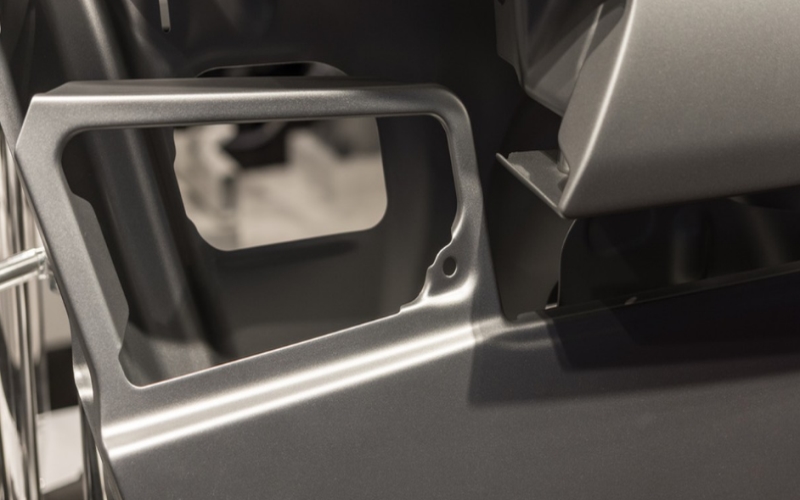
Sheet metal fabrication in the automotive industry is an important processing technology, mainly aimed at comprehensive cold processing of metal sheets (usually below 6mm). This process includes multiple steps such as cutting, punching, bending, welding, riveting, mold forming, and surface treatment, and its notable feature is that the thickness of the same part is consistent. As cars become more advanced, the demand for high-quality automotive components continues to grow, highlighting the indispensable role of sheet metal fabrication in the automotive industry.
Benefits of sheet metal fabrication for the automotive industry
Sheet metal fabrication has significant benefits for the automotive industry, which are reflected in multiple aspects, including but not limited to vehicle performance, exterior design, safety, and production efficiency.
1.Strength and safety improvement
Sheet metal fabrication uses high-strength metal materials, and through precise stamping, cutting, welding and other processes, can create a sturdy body structure. This structure can effectively absorb and disperse the impact force during collisions, protecting passengers from injury.
2.Lightweight design
With the increasing awareness of environmental protection and the improvement of fuel efficiency standards, automobile lightweighting has become an industry trend. Sheet metal manufacturing uses high-strength and lightweight metal materials, such as aluminum alloy, to reduce the weight of the vehicle while ensuring its strength, thereby reducing fuel consumption and exhaust emissions. Lightweight also helps to reduce fuel consumption and carbon dioxide emissions, in line with current trends in environmental protection and energy conservation.
3.Customization and personalization
Sheet metal fabrication can achieve smooth and seamless connection of car shells, improving the overall aesthetics of vehicles. Consumers can choose customized sheet metal parts based on their preferences and needs, such as unique body colors, wheel hub styles, etc., to make the vehicle more personalized.
4.Cost optimization
Sheet metal fabrication adopts advanced processes and equipment, which can achieve mass production and improve production efficiency. This helps to reduce manufacturing costs and make car prices more affordable. In addition, optimizing the design and production process of sheet metal parts can also help reduce material waste and lower manufacturing costs.
Common automotive sheet metal fabrication techniques
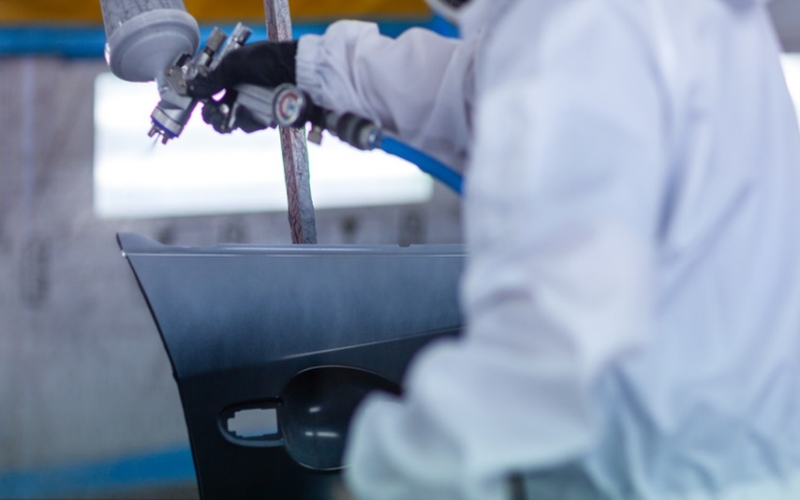
Automotive sheet metal fabrication is an important part of the automotive manufacturing process, involving various processes and technologies. The following are some common automotive sheet metal processing techniques:
1.Laser cutting
Laser cutting is a high-precision and high-efficiency sheet metal processing method, which uses a high-energy density laser beam to irradiate the cutting area, causing the material surface to evaporate or melt, while forming small slits on the material surface to achieve the cutting purpose. This non-contact machining method does not require tools and molds, and has a wide range of applications.
In the automotive industry, laser cutting equipment is widely used in various aspects such as car body cutting, car component cutting, and car interior decoration cutting. Compared with traditional mechanical cutting methods, laser cutting has higher accuracy and faster speed, while reducing material waste and lowering production costs. In addition, laser cutting can also cut various complex shapes and structures of components, meeting the requirements of different materials and specifications in automotive manufacturing.
The main advantages of laser cutting include high precision, high speed, small heat affected zone, suitability for various materials, and high degree of automation.
2.Metal stamping
Metal stamping is a manufacturing process that uses metal stamping molds to shape metal sheets into three-dimensional dimensional workpieces. In this process, stamping machines economically, quickly, and accurately shape flat metal sheets or coils into metal parts in large quantities. Metal stamping can efficiently form metal sheets, and its production principle mainly includes two methods: single punching and continuous punching.
During the single punching process, the metal sheet is first placed on the worktable of the punching machine and fixed by a clamping mechanism. The punch on the punching machine is operated by an up stroke and moves downwards at a certain speed to stamp the metal sheet. As the punch continues to move downwards, the metal material undergoes plastic deformation under the pressure of the punch, forming the desired shape. The working principle of continuous punching is similar to that of single punching, but the mold is achieved by continuous up and down movement, which has higher production efficiency and faster working speed.
In addition, metal stamping can not only perform basic operations such as punching, convex punching, grooving, and bending, but also achieve various functions such as cutting and forming. This gives metal stamping significant advantages in manufacturing high-precision parts and complex shapes.
3.Welding
Welding is a common manufacturing process in the automotive industry, whereby metals or other thermoplastic materials are joined together through heating, high temperatures, or high pressure. It finds extensive application in connecting various components of automotive bodies, chassis, engines, and more. Through precise welding processes, the structural integrity and safety of automobiles can be ensured.
Key characteristics of welding include:
- Strength: Welding forms strong connections, often with joint strength exceeding that of the base material.
- Economical: It utilizes simple welding equipment and tools, resulting in low costs.
- Versatility: Welding can be applied to materials of various shapes and sizes, enabling assembly of complex structures.
- Speed: Welding operations are typically fast and straightforward, significantly enhancing production efficiency.
Despite its widespread use in the automotive sector, welding may present certain inherent flaws that could affect the strength, sealing, and overall stability of weld joints. Examples include welding undercut, cracks, spatter, among others. Therefore, strict control over welding process parameters and operational techniques is necessary to ensure welding quality.
Applications of sheet metal fabrication for automotive
The application of sheet metal manufacturing in the automotive industry is very extensive and important. Here are some specific application examples:
1.Manufacturing of body and exterior components
Whether it is the frame, roof, doors, or front and rear bumpers, these key components are all manufactured through sheet metal technology. The sheet metal process can ensure the accurate size and shape of these components, as well as good assembly performance. Through sheet metal manufacturing, car manufacturers can precisely control and shape the shape of the car casing, ensuring tight connections between various components, and making the appearance of the car more aesthetically pleasing.
2.Chassis and suspension system
These components are usually made of high-strength sheet metal materials and processed through processes such as stamping, cutting, and welding to ensure the stability and safety of the car. The chassis and suspension system made of sheet metal can withstand impacts and vibrations under various road conditions, providing drivers with a stable and comfortable driving experience.
3.Automotive components
Many automotive components, such as radiators, fuel tanks, exhaust pipes, etc., are also made of sheet metal materials. These components need to have good strength and durability to cope with various challenges that cars may encounter during operation. In addition, consumers can choose sheet metal parts in different colors, shapes, and sizes according to their preferences and needs, creating unique cars.
Summary
This article delves into automotive sheet metal fabrication to emphasize the importance of this process in ensuring the quality of automotive components. In such a fiercely competitive market, in order to maintain its competitive advantage, enterprises must ensure that the manufactured automotive components meet the highest standards. Boyi is an outstanding representative in this field, providing first-class sheet metal fabrication solutions for the automotive industry.
If you are looking for a partner who can meet your sheet metal fabrication needs, then Boyi is undoubtedly your best choice. We have rich industry experience and a professional technical team, which can tailor comprehensive and efficient solutions for you, promoting the progress and development of the automotive industry.
